Saturday, 23 March 2019

Algae Between My Fingers - Poem by Rosa Jamali

A shortcut to an unknown spot (a crime that I've revealed)

With your permission
We'll assess whether this unknown sign is correct
the crime that I've revealed
they've exiled me to an unknown spot
and it's no distance from being underground*

Speak, say something, confess!
I came into the world on the day you stroked my shroud
my constant entertainment was a dark loophole
my evidence a page from my sister's identity card
they ascertain the strength of gravity the moment a stone
doesn't sink in water
Speak, say something, confess!
the crime that I've revealed

The crime that I've revealed

That's great!
I don't know if it's four o'clock or five
if today's Thursday or Friday
if it's October or November
if it's winter or autumn
minutes are halted, forbidden
I'm guilty of murdering someone
it's not the first time
it's not the last time
it's the thousandth time they've put me in prison
I have thirty seconds
for years my shadow has followed your shadow
my hair is a tangled spider's web
there's algae between my fingers
I won't look into your pupils any more
you've spilled cold milk on my bones
you've shot a volley of bullets into my pupils
for thirty five days I've been in love with corpses
though this is an inaccurate account
That's great!
his eyeballs are cloudy with pneumonia
my breasts feel crushed
they give me a blind man's stick
and looking at the calendar is forbidden
That's great!
A woman is screaming, vertical and horizontal, at eighty degrees on the clock
from the welts the stick makes
a woman is screaming round the clock
a woman is screaming, a few seconds, a moment of surrender, it's ninety degrees
a woman is screaming and the gashes and a wall-clock, one hundred and eighty degrees
a woman is screaming / it's half past midnight/ the circle's complete
it's three hundred and sixty degrees

a revolver's diagonal shape on the wall
the smell of blood's sent me crazy
Speak, say something, confess!
it looks like bad weather's coming
the world is a short woman who's been slashed down
Speak, say something, confess!
they've exiled me to an unknown spot
a slab of rubble drops into water
and it's no distance from being underground*

a woman is screaming …


This piece which is an excerpt from a long verse drama has been translated by Dick Davis; British Acclaimed poet & translator of Ferdowsi(The Book Of Kings) / TRANSLATED FROM ORIGINAL PERSIAN

The Clock Cell


Something happens to die
And the sunlight which has been soaking is wet and obscure
If I carry on the lines
The frozen object which has been captured in your hands will drop
Otherwise, the day has come to an end.

Void
When I get home; staring at all those cubical shapes;
Standstill current of water
And the sunlight which is never damp
On the blank sheets of writing
bursting into tears over old sheets on my bed.

The elements
Its essence has been painted by my blood
The rain of cats and dogs on my field
The moon is encompassing the land!

Here with the frostbite on the iron post,
I left the time on the river bank
Time was a whim slipped away from my fingers
The moments have been cleaned and cleared.

The wall has turned blue
Me and the black gown
Have taken the flow of the river.

It's a calf death breast-fed.

What is it?
Sediments on a neutral background
It could be in a different colour
It's been many days since I started walking on the rope
The creased moon is hanging down the ceiling.

Blizzard
A flimsy stone
The frostbite on the window glass
The bridge has fallen down
Silence on a metal tape
Ending to a blind full stop.


(TRANSLATED FROM ORIGINAL PERSIAN TO ENGLISH BY ROSA JAMALI)

Monday, 4 March 2019

I left my name on the Land I stepped


A collaborative project with English painter Charlie Calder-Potts to illustrate this timeless narrative and its themes. She has taken people from the ‘here and now’ on the streets of Iran and placed them within the context of Persian Poems of Rosa Jamali.


Check more,...

Sunday, 3 March 2019

Knotweed - Poem by Rosa Jamali


I've turned to an annual plant, shielded and armed, from the genus of hollyhocks and broad leaves

Whole five-thousand-year history is turning over my head

It was the moment that you were buried with no shroud

And I'm the weeds and icicles of this land, …

Had been climbing over the flames, it was a black ladder, burning my sole feet

It was the moment that I had chopped my heart, you had sucked my blood in that woundless bowl

Had been growing like a wildflower, had been living for millions of years

In Syriac over my body:

Nail-shaped herbs had written some letters.

I'm the genius of thorns with wounded heels of thousands of miles travelling in the oasis

My blistered feet, weary and my parched lips

Shattered by the mountain ranges I had been fighting with my claws

My roots are extended with the fluent liquid in the vessels

Lilacs had grown over my arms and now I've turned to the ivy as if burning in the fire

I left my name on the land I stepped, …


And who's this weeping human child, lamenting two thousand years in my arms? Still weeping? ! Always weeping? !

I've been raising this child for six thousand years

I've grown this Persian hero to send him to the battlefield

Breastfed him

And he has grown out of my eyes

This extreme light which has blinded me….


(TRANSLATED From original Persian to English by the Poet) 

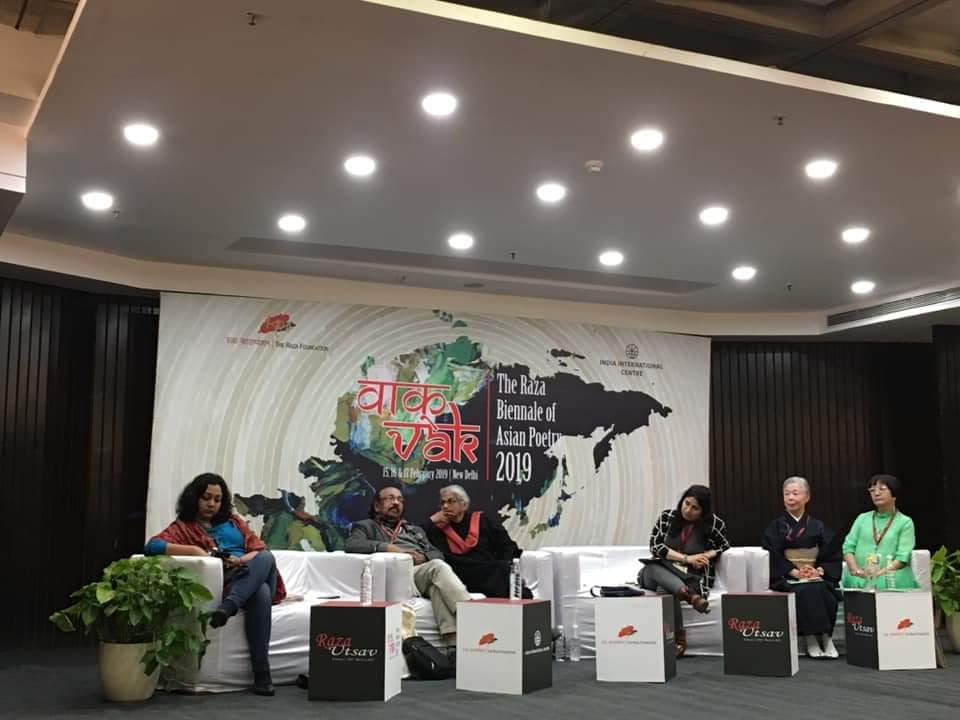
The Biennial of Asian Poetry


Saturday, 16 April 2016

Ecology and Environment in Persian Poetry


Talk By Rosa Jamali (India; Green Life Organization; December 2015)


Abstract:
1
Nature has always been a major theme in Persian Poetry. Persian Poetry pays a great tribute to Persian Mythology. Creation seems to have been taken place through a process of metamorphoses of natural resources, vegetation, flora, and fauna. This has made a great influence on Persian Poetry. In Khorasan School, Manuchehri Damghani depicts autumn and describes death and rebirth cycle in a very popular poem. In THE GREAT BOOK OF KINGS, Ferdowsi always describes gloomy scenes as the earth is not going to revive itself. Later in the Poetry of Hafez and Rumi nature creates lots of metaphors in reference to Islamic mysticism. In Modern Persian Poetry Nimā Yushij who lived a whole life in the countryside of Northern Iran describes nature very strongly while Sohrab Sepehri takes the initial steps to get close to a sort of belief; the manifestation of God in nature and creating a sacred halo around the environment,…
2
As Plato said poets recreate nature by imitation and modeling it as the major source of beauty so that the description of pure nature and the Garden of Eden is just found in poetry, poets preserve the untouched, pristine and serene nature this way. It’s a calamity when poets see the destruction of the life cycle in nature. Mother Nature is represented in poetry as an archetype so is the birth and death recycle. A poet insists on nurturing and raising what has been missed or ignored over the centuries to survive and maintain the energy sources of the planet earth
3
Based on Persian mythology there could exist a literary theory; quite close to ecofeminism; for Chista and Anahita have been depicted as wise and insightful Goddesses who play significant roles in nature's elemental forces whereas in Greek Mythology Medusa and Pandora have been described as sources of evil and destruction. I'd like to discuss that there could be a sort of rebirth in ecofeminism in Persian poetry, quite representative to what has already existed in our racial cultural and historical background and in reference to a sort of Manichean aesthetics,… this says that feminine writing cares much about nature and keeping it safe; feminine writing is in conflict with death, mass murder, genocide and abortion of beings ; Birth and Rebirth archetype and Mother nature could strongly appear in feminine writings, how can this type of writing dispense with slaughter and extinction of some species of nature,..?!
So that Persian feminine writing could present quite a unique point of view in this respect;.
4
In the visionary writings of many Persian mystic poets, for instance, the followers of illumination like Sheikh Shahabuddin Suhrawardi; there exists a kind of transcendental view towards nature. Mystical Visionary writings have been written in harmony of a life which could transcend you to heaven. This life which is quite peaceful and has been practiced through time, the path is not an easy one. You need to go through seven steps to become a real mystic; a sort of alchemist and reach to the kingdom of God which is called Malakut. You need to forget greediness and gluttony through fasting, you'll forget lust and temptations through a secluded lifestyle and you feel much closer to God by repeating holy verses, this makes you a better human being, a spiritual medium, and a peacekeeper.
5
Masnavi Manavi is a principal text for the seeker of a better life, getting to know about enlightenment, then the basic steps you need to take to see the world through the lens of a Suffist, through Persian wisdom and a divine ladder,. Sonnets of Rumi which I include them in occult reading give you a sense of Ecstasy and euphoria what makes you dance till you drop. That specific dance being a long-time ritual is called Sama; you'll become a different human being with Godly characteristics which help you to get to know to the kingdom of heaven, now you need to forget your earthly ambitions. You need to forget temptations and set a limit on your needs and wants. At last you'll get united with the whole universe, this step is called Malakut; by reading Masnavi in a holy place which is called Khanqah and taking its advice in your daily life, you'll become a selected human being; blessed with God and a heavenly guardian which paves your way to the kingdom of heaven.
6
Deconstruction made the literary theory quite easy, there is no binary opposition of nature/ man; so that there's no grand narrative. Wildlife can be created in poetry with no preconception. Nature makes and creates itself in a primitive process. All these mentions that human being is no longer the ruler of nature, the who one was supposed to be THE KING for a lengthy time,…
7
The idea has been very much inspired by advising letters to the kings of Persia before Islam; how to become a good and just ruler by hard practice and a kind of mental exercise, so great kings grow with Godlike features which have been bestowed upon them and being granted by heavenly inspirations; they need to follow the principles of good deeds, good thought, and good speech.
The story of Zahhak in Persian national epic" THE GREAT BOOK OF KINGS", is a very dark myth, a critical turning point. Persians were vegetarians before that, the cook persuades the king to eat meat and the king enjoys the taste. Later the cook prepares the brains of the human being as a delicious meal and consequently snakes as symbols of evil grow on his shoulders. The king becomes corrupt and this is the most oppressive era of history for such a nation of strong beliefs!

Thursday, 19 November 2015

The Angles Of The Frame (Translated From Original Persian To English by the Author) By Rosa Jamali


1
Many years have passed since the day, 

I looked into a mirror, saw a wrinkled face.
I've been disclosed to the bulging sands of my bed.

2
Aeons of breath account for the many veins in my atrium.

3
The bull I breast-fed for many years
And I've submerged into the frame.

4
I knew the justifications were hard,
Hard as against the current of water.
No news from the ambiguous points
something uncommon.
It can't be justified by natural rules,
many years we've been tangled on it.

5
This usurped land is a part of all buried treasure islands
No finger points in any direction.
Lost in the dead-end alleys
Tracing images without a compass.

6
Horse pounding pulse sing endlessly in my blood.
My kinsmen of horses…
Blood-line linked as to rays of a circle
like roots of a tree growing deep on the roof.

7
You can't stop the hands of the clock.
You can't come back to the broken minutes.
The days have been arranged one after another.
The knights have left the game one after another.

8
There was a straw mat where you fell asleep.
I became numb, quite used to the stillness of the house.

9
Was something supposed to get away from the core
to join us?
A century has passed and we still live in this house.

10
Dimensions have shifted
Not exclusive to the roof
The letters approved us as the residents of the house
They ran away as the convicts
And we got used to the standstill.

Rosa Jamali is a Poet, Playwright, Translator and a Poetry Scholar

  Home Rosa Jamali's poetry-in-english The Shadow, a Play by Rosa Jamali Photo Gallery Interviews in English Translations into English T...